Brain Simulation Models

Understanding brain function requires linking molecular, cellular, circuit, and systems-level data at whole-brain scale. We combine the BrainX software, our differentiable and learnable algorithms, and multi-modal neuroscience data to build whole-brain models of model organisms — serving as both scientific output and algorithm validation, and as the foundation for general brain models.

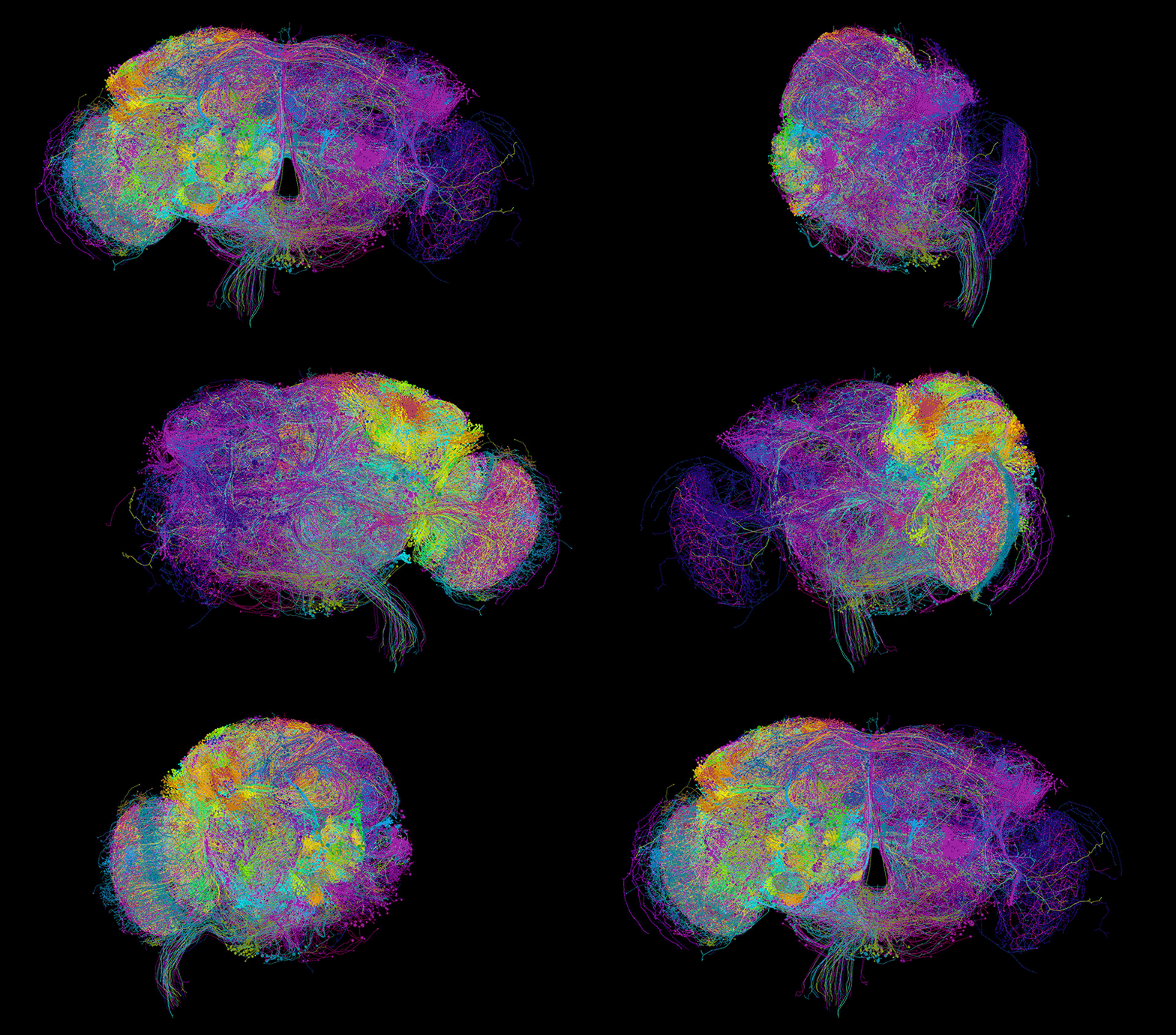
Drosophila Whole-Brain Model
Drosophila melanogaster Initial results forthcoming

Drosophila Whole-Brain Model

A whole-brain spiking model built on public Drosophila connectomes (FlyWire, Hemibrain) and multi-modal neural recordings — used to dissect olfaction, vision, and decision circuits.

Neurons
~1.4 × 10⁵
Synapses
~5 × 10⁷
Modeling scale
Cellular · whole-brain

Data sources

  • FlyWire whole-brain connectome
  • Janelia Hemibrain
  • Public calcium imaging & behavioral datasets

Applications

  • Olfactory circuit function
  • Visuomotor integration
  • Decision and navigation circuits
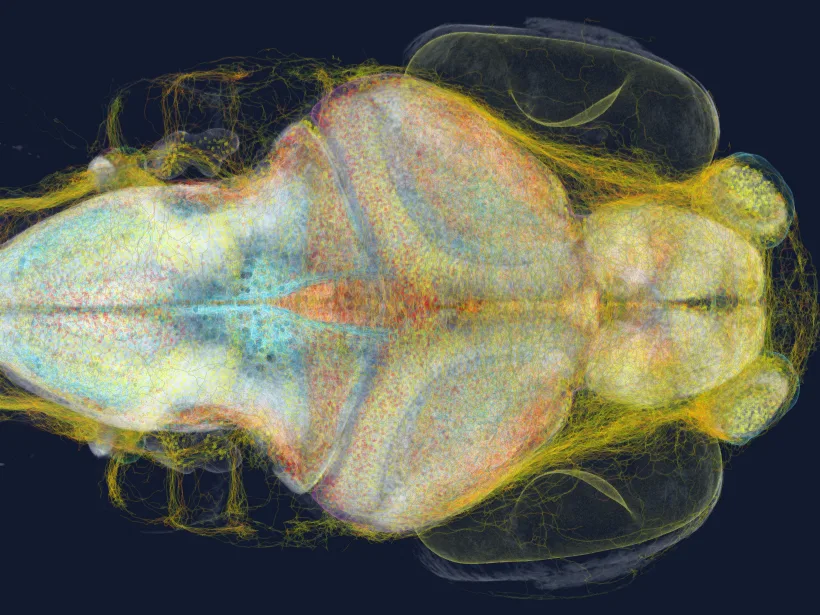
Zebrafish Whole-Brain Model
Danio rerio (larva) Under construction

Zebrafish Whole-Brain Model

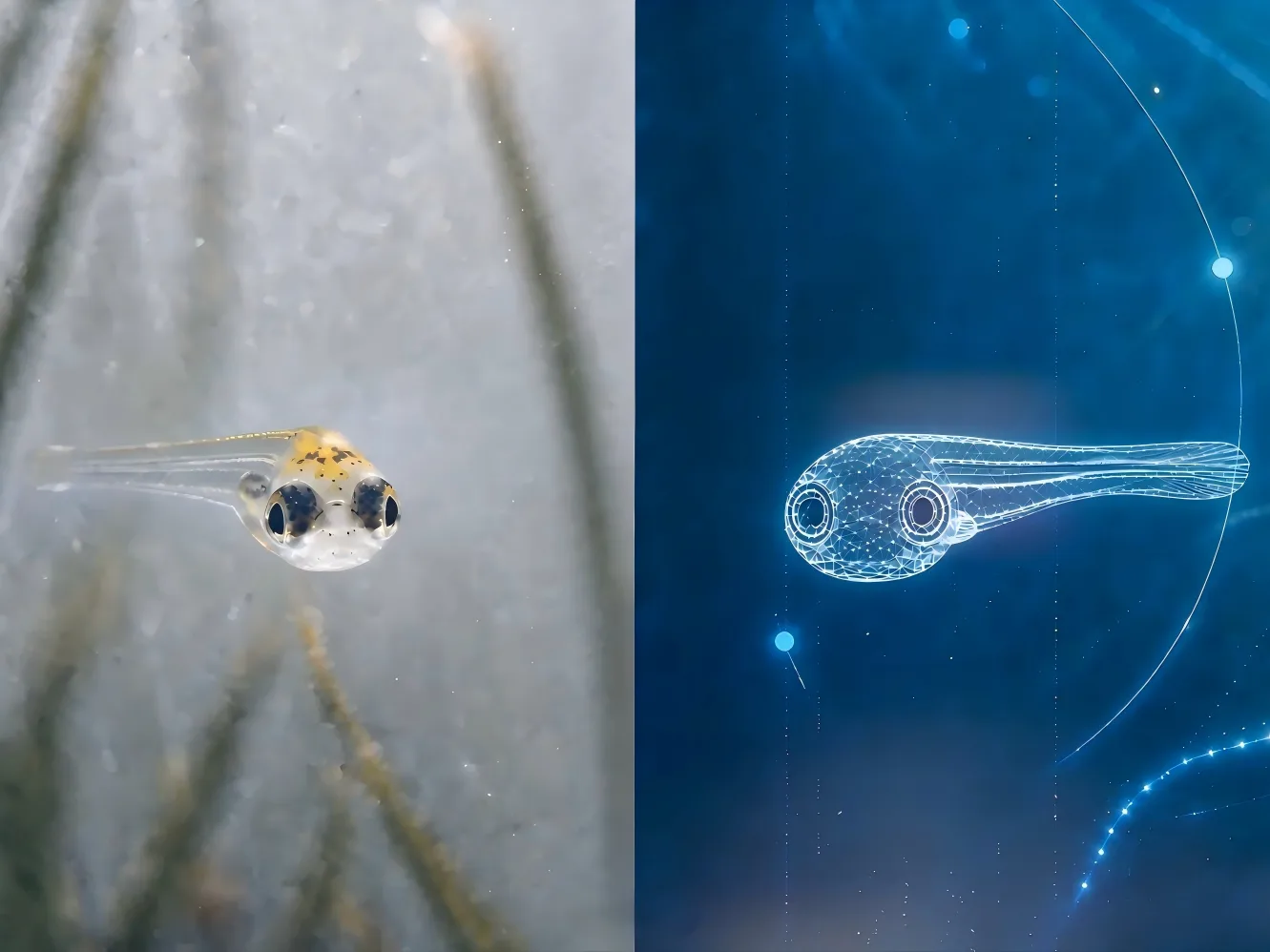
A whole-brain dynamics model combining larval zebrafish brain-wide calcium imaging with emerging connectomics — a vertebrate entry-point for whole-brain simulation studies of sensorimotor integration and learning.

Neurons
~1 × 10⁵
Brain-wide coverage
Near whole-brain Ca²⁺ imaging
Modeling scale
Cellular · whole-brain

Data sources

  • Public whole-brain calcium imaging datasets
  • Emerging zebrafish connectomics
  • Behavioral tracking and stimulus-response data

Applications

  • Sensorimotor integration
  • Learning and behavioral plasticity
  • Vertebrate whole-brain dynamics baseline

The three tracks feed one another: BrainX software provides the simulation substrate → modeling algorithms provide learning and optimization → whole-brain computational models are the scientific output and proving ground. Together they form our software–algorithms–models research paradigm.