01 Postdoctoral Researchers
3 open Large-scale simulation · Spiking networks · Differentiable simulation · HPC · Disease modeling
-
Suitable directions include large-scale brain simulation, multi-scale neural modeling, spiking networks with online learning, differentiable simulation, brain-inspired computing, HPC, computational disease models, and multimodal neural data modeling.
Responsibilities
- Lead project work and publish in leading journals and top conferences.
- Apply for NSFC, China Postdoctoral Science Foundation, and other competitive grants; contribute to core lab projects.
- Help organize seminars and foster cross-group collaboration.
- Other research duties assigned by the host.
Qualifications
- PhD (or imminent) in neuroscience, AI, computer science, HPC or a related field; first-author publication of original work.
- Strong interest in brain simulation and brain-inspired intelligence; independent and curious.
- Experience with computational modeling, neural simulation, or AI framework development preferred.
- Solid scientific English; clear communicator and collaborative team member.
Compensation & benefits
- Annual salary ¥520k+ pre-tax (preferential 15% income-tax cap applicable).
- Full social insurance & housing fund; Zhuhai / Hengqin hukou eligibility.
- Children's education support; access to high-end talent housing.
- Relaxed, collaborative research culture.
Application materials
Email subject: Postdoc Application — Your Name
1. CV (education, research, publications, awards).
2. Personal statement: motivation for postdoc, long-term career plan, why this lab, which research direction interests you, and reflections on prior work of ours.
02 Graduate Students (PhD / Master)
ROLLING Computer science · Mathematics · Physics · AI · Neurobiology · Computational neuroscience
There are no specific PhD or Master's openings at the moment. Students interested in brain science, AI, and computational modeling are welcome to submit a letter of intent via the application section below.
03 Interns
ROLLING Project-based · Bachelor's and above · On-site required · 3-month minimum
No active intern openings right now. If you're interested in our software, kernels, or algorithms, reach out via the application section below.
04 Research Assistants
1 open Large-scale simulation ·Differentiable optimization · Whole-brain modeling · Full-time · Bachelor's and above
-
Position background
In the modeling direction, we connect multimodal neural data such as connectomes, electrophysiology, and imaging to our in-house brain-simulation software, building whole-brain computational models from Drosophila and zebrafish to the human brain. We investigate the neural-circuit mechanisms behind sensation, movement, decision-making, learning, and adaptive behavior. You will work with real brain data and state-of-the-art differentiable modeling and AI algorithms, designing and running your own experiments inside a digital brain.
Responsibilities
- Build, fit, and analyze large-scale or whole-brain dynamical models based on multimodal neural data.
- Use brain-simulation models to study the computational principles and neural mechanisms of cognitive functions.
- Combine AI and differentiable optimization methods to improve the interpretability and predictive power of brain-simulation models.
- Participate in literature reading and reproduction, paper writing, and academic exchange in China and abroad.
Qualifications
- Master's degree or above in computational neuroscience, neuroscience, AI, machine learning, automation, physics, mathematics, or a related field; new graduates are welcome.
- Good Python programming skills, with familiarity in neural-dynamics modeling or mainstream deep-learning frameworks.
- Experience in neural data analysis, spiking neural networks, dynamical systems, Bayesian inference, or high-quality publications is preferred.
- Strong curiosity about how the brain works, with responsibility, good communication skills, and a collaborative mindset.
Compensation & benefits
- Annual salary starts from RMB 150k pre-tax, paid on an annual-salary basis.
- Full social insurance and housing fund contributions.
- Individual income-tax refund incentives in the Hengqin Guangdong-Macao In-Depth Cooperation Zone, subject to local policy.
- Living and housing subsidy of RMB 60k-270k, with assistance applying for talent apartments in the park.
- Assistance with Zhuhai / Hengqin household registration and children's schooling.
- Support and encouragement to apply for institute joint PhD training or further study in China or abroad while employed.
How to apply
Submit: CV + degree certificates + electronic copies of papers + relevant supporting materials.
Application email: wangchaoming@gdiist.cn
Email subject: Brain Simulation Research Assistant Application + Name
05 Engineers
1 open Brain-simulation software · High-performance computing · Full-time
-
Position background
The lab develops BrainX, a multi-scale brain-simulation ecosystem spanning ion channels, neurons, neural circuits, and whole-brain networks. Its core components include BrainPy for spiking neural-network modeling, BrainCell for biophysical modeling, BrainState for stateful compilation on CPU/GPU/TPU, BrainEvent for event-driven sparse computing, BrainUnit for unit-aware computation, BrainTrace for online learning with linear memory, and BrainMass for differentiable neural-mass whole-brain modeling. Related work has appeared in Nature Communications, eLife, and ICLR. We hope you will help us make simulating a brain computationally and engineeringly feasible.
Responsibilities
- Design, develop, test, and maintain core components of the BrainX ecosystem, building the software platform for ultra-large-scale brain simulation.
- Tackle core technologies in brain-dynamics simulation, including heterogeneous high-performance computing, compiler optimization, custom operators, and distributed parallelism.
- Continuously improve performance, APIs, and documentation so brain simulations run faster, scale larger, and become easier to use.
- Contribute to open-source community building and user support, and turn technical results into papers and invention patents.
Qualifications
- Master's degree or above in computer science, software engineering, electronic information, high-performance computing, or a related field; new graduates are welcome.
- Strong Python and/or C++ engineering skills, with familiarity in Git-based collaboration and software-engineering practices.
- Experience with JAX, PyTorch, CUDA, Triton, compilers, distributed parallelism, operator development, or open-source contribution is preferred.
- Strong interest in brain simulation and brain-inspired intelligence, with responsibility, execution ability, communication skills, and a collaborative mindset.
Compensation & benefits
- Annual salary starts from RMB 150k, pre-tax.
- Full social insurance and housing fund contributions.
- Individual income-tax refund incentives in the Hengqin Guangdong-Macao In-Depth Cooperation Zone, subject to local policy.
- Living and housing subsidy of RMB 60k-270k, with assistance applying for talent apartments in the park.
- Assistance with Zhuhai / Hengqin household registration and children's schooling.
- Support and encouragement to apply for institute joint PhD training or further study in China or abroad while employed.
How to apply
Please provide a CV, degree certificates, full electronic copies of published papers, and other materials demonstrating academic or professional ability.
Application email: wangchaoming@gdiist.cn
Email subject: Brain Simulation Software Engineer Application + Name
How to Apply
Send CV and personal statement to: wangchaoming@gdiist.cn
Use the email subject specified per position (see each role).
Location
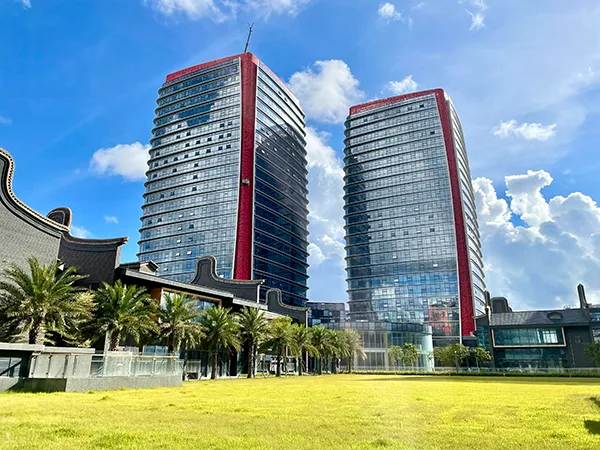
Hengqin, Zhuhai · Guangdong Institute of Intelligence Science and Technology
No.2515 Huandao North Rd., Hengqin Guangdong-Macao In-Depth Cooperation Zone, Building 6